Why Growers Value Fiery Red Daylilies in High-Impact Summer Borders
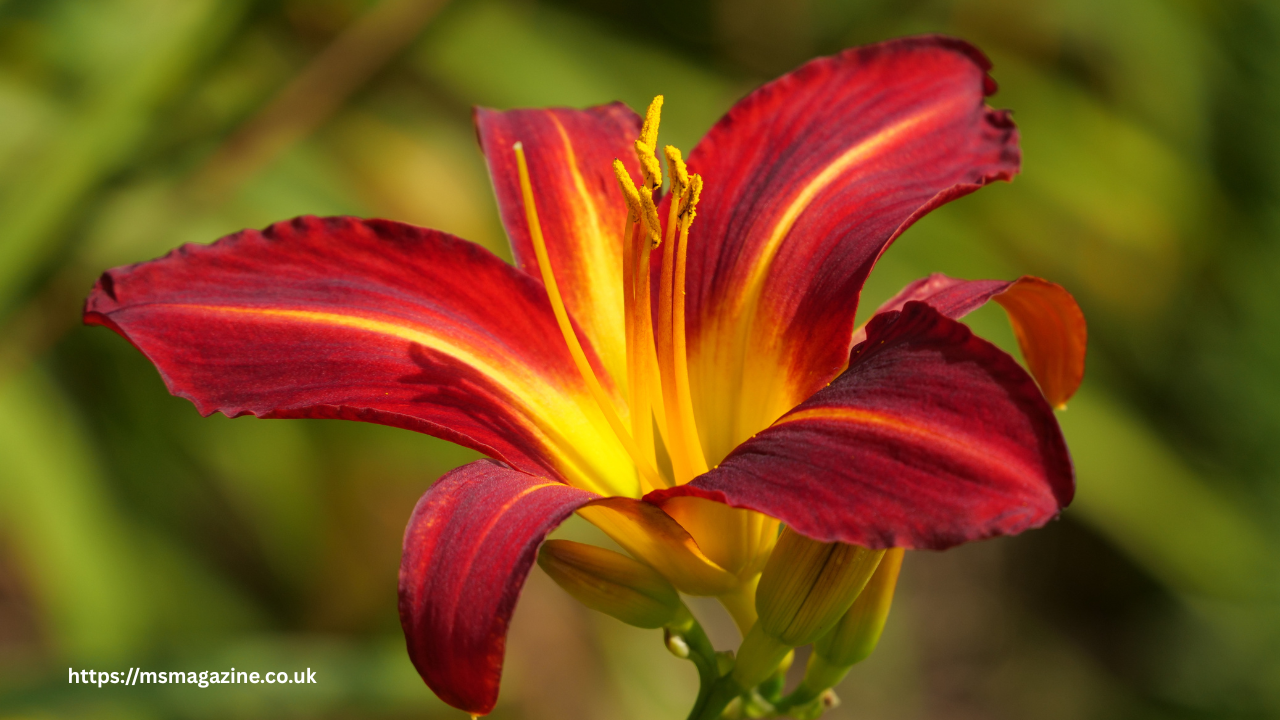
Fiery red daylilies have earned a firm place in modern borders because they solve a common midsummer problem: many planting schemes lose force when gardens should be at their most confident. Spring bulbs have faded, early perennials are slowing down, and foliage alone rarely provides enough lift across a large space. Daylilies in strong red shades step into that gap with dependable flower production, clear visual presence, and a shape that works in both formal and informal settings.
Their value is not limited to colour alone. Growers rate them highly because they combine impact with resilience. A mature clump can produce a strong display without the demanding care associated with some other bold summer flowers. They tolerate a wide range of soils, cope well with ordinary British weather patterns, and recover steadily even after dry spells. For commercial growers and private gardeners alike, that balance matters. A plant must do more than look good on a label; it has to justify the space it takes up in a border over several years.
Let’s learn from a specialist commentary from the premier grower of daylily plants, SwallowtailDaylilies: “Gardeners looking at red daylily plants for sale are often trying to strengthen the middle of the summer border. The best fiery reds do that without becoming difficult plants. They offer clear colour, repeat performance from established clumps and enough variation in tone to suit very different planting styles.”
That point explains why these cultivars are valued so highly. A fiery red daylily is not simply a bright flower. It is a working plant in the design of a border, helping to connect early and late summer, anchor surrounding colours, and keep the garden looking deliberate rather than tired. In a season when many borders become visually loose, red daylilies bring discipline as well as energy.
Why red works so well in border design
Red can be mishandled in gardens. Used badly, it appears crude, detached from the rest of the planting, or too dominant for the available space. Used properly, however, it has a structural role that softer colours cannot match. Fiery red daylilies are valued for creating focal points within a border. They catch the eye immediately, which allows the gardener to guide attention across a long bed or break up a broad planting area that might otherwise look flat.
This is especially useful in summer borders with a great deal of green, silver, or muted foliage. At that time of year, strong reds prevent the planting from drifting into sameness. They can act as fixed points among grasses, repeat against dark-leaved shrubs, or sharpen combinations built around oranges, rust tones, and dusky purples. In larger gardens, where viewers often stand at a distance, these flowers read clearly when subtler shades disappear.
Another reason growers value them is the complexity within the colour itself. The best fiery red daylilies are not simple scarlet discs. Many carry undertones of burgundy, brick, mahogany, or warm black-red at the throat and midrib. That depth makes them easier to place with other plants. They can be paired with bronze fennel, Crocosmia, Helenium, Persicaria, Kniphofia, or dark canna foliage without looking one-dimensional. In cooler schemes, they can be used as deliberate punctuation rather than as the main theme.
Red daylilies are also effective because the flower form is clean. The blooms are bold enough to register, but they are not heavy or congested. Each flower opens, performs, and passes on, while the clump continues producing fresh blooms. That daily renewal keeps the effect alive. It feels active rather than static, which is particularly important in high-impact borders designed for a long season.
In practical design terms, fiery red daylilies help establish rhythm. Repeating the same cultivar or a closely related group at intervals through a border gives coherence without rigid symmetry. This is one reason growers often recommend them for ambitious home gardens as well as for public plantings. A strong red repeated three or four times can organise an entire bed.
Reliability matters as much as colour.
A showy flower has limited value if the plant behind it is weak, short-lived, or overly sensitive to conditions. Daylilies are prized for combining decorative impact with skillful performance. That reliability matters to growers, who judge plants over several seasons rather than in a single peak week.
Fiery red forms generally share the strengths for which daylilies are well known. They establish into dense clumps, produce strappy foliage that gives useful volume even when not in flower, and adapt to most reasonable garden soils provided drainage is not poor in winter. They tolerate full sun well, which is crucial for strong colour development and heavy flowering, but many also manage in light shade. This flexibility broadens their use in mixed borders where light conditions shift over the course of a day.
Another advantage is their response to ordinary maintenance. They do not require constant staking, complicated feeding regimes, or repeated intervention to keep them presentable. Deadheading helps the display look clean, but even when done only occasionally, a mature clump usually continues to perform. After flowering, the foliage remains a useful green presence and can be tidied later in the season. This gives growers confidence when recommending them to gardeners who want bold results without specialist handling.
British summers are variable, and this is where daylilies often outperform more delicate border plants. Heat does not usually trouble them, and short dry periods are less damaging once roots are established. Rain can mark individual blooms, as with many summer flowers, but the rapid turnover of fresh flowers means the overall effect recovers quickly. In mixed plantings, persistence counts for a great deal. One tired plant can make a border look neglected; daylilies help prevent that lapse.
Growers also appreciate the plant’s long-term economics. A good clump increases steadily and can be divided when performance slows or when more stock is wanted for other parts of the garden. That makes fiery red daylilies particularly good value in larger schemes, where repeated drift planting is often more effective than a single isolated specimen. A plant that can be built into the garden over time is always more useful than one that has to be replaced frequently.
The role of fiery reds in modern summer borders
The strongest reason growers value fiery red daylilies is that they suit the way many British gardeners now want their borders to work. The traditional mixed border is still popular, but there is greater emphasis on longer performance, stronger seasonal structure, and planting that remains readable from early summer into autumn. Fiery red daylilies fit that approach unusually well.
In a contemporary border, they are often used in the middle layer, where they bridge lower edging plants and taller late-summer perennials or shrubs. Their arching foliage creates a neat mound, while the flower stems rise high enough to be seen without making the plant a top-heavy vertical accent. That makes them easy to place. They do not demand a starring role in the front row, yet they are too effective to disappear at the back.
They are also useful in borders designed around contrast rather than harmony alone. A red daylily can sharpen cool planting schemes built from blue salvias, purple veronicastrums, or grey foliage, especially when used sparingly. In hotter palettes, it can intensify the whole composition, working with oranges, amber tones, and deep yellows to produce a border that carries real force in high summer. Importantly, the flower shape keeps these combinations from becoming visually dense. The planting remains breathable.
Public and semi-public gardens often rely on plants that register quickly with visitors. Daylilies perform well in this respect because they are immediately legible. Even viewers with little knowledge of plants understand their contribution. In private gardens, the same clarity is valuable from the house or terrace, where a border needs to hold together as a view rather than merely as a collection of specimens.
Fiery red daylilies also lend themselves to repetition with variation. A gardener can use several cultivars within a narrow range of red tones, allowing changes in height, flower shape, or eyezone pattern while retaining a unified effect. Growers favour this because it gives gardeners options. A border can look rich and developed without becoming confused. That is often the difference between a planting that feels intentional and one that seems assembled plant by plant.
How to grow them well in British conditions
Although daylilies are forgiving, growers know that a few sensible decisions make a noticeable difference to the quality of flowering. Fiery red cultivars are at their best when they receive plenty of light. Full sun usually gives the richest colour and strongest stem production, though light afternoon shade can be helpful in particularly exposed sites. In most of Britain, an open position with at least six hours of sun is a sound starting point.
Soil preparation matters more than elaborate aftercare. A border improved with organic matter and cleared of persistent weeds gives a young clump the best chance to settle quickly. Daylilies dislike being buried too deeply, so the crown should sit close to soil level rather than being planted like a peony or rose. Once established, they are fairly tolerant, but poor planting depth can reduce vigour and flowering.
Watering is most important in the first growing season. After that, established plants usually manage well, though prolonged drought will reduce flower size and stem count. Mulching in spring helps conserve moisture and keeps weed competition down. A balanced feed can support performance on lighter soils, but excessive nitrogen is unhelpful because it encourages lush leaves at the expense of flowers.
Maintenance through the flowering season is straightforward. Removing spent blooms keeps the clump tidy and can make the display look fresher, especially in prominent borders. When the main flush is over, old stems can be cut away. In autumn or late winter, the foliage can be tidied depending on the cultivar and how neat the garden needs to look. Division every few years is useful if the centre of the clump weakens or flowering becomes less generous.
Pests and diseases are rarely severe enough to outweigh the plant’s value, which is another reason growers rate it so highly. Slugs may damage young growth in spring, and occasional stress from poor drainage or overcrowding can affect performance, but daylilies are generally robust. For gardeners wanting a dependable plant with real colour authority, that combination of low drama and high return is hard to ignore.
Choosing the right fiery red daylily for lasting impact
Not every red daylily produces the same effect, and experienced growers pay close attention to detail. Height, flowering period, flower size, bud count, and the exact tone of red all influence how useful a cultivar will be in a border. A tall, open-flowered type may be ideal for weaving through grasses, while a lower, denser cultivar may be better suited to the front half of a deep mixed bed.
Tone is often the first decision. Some fiery reds lean towards orange-red, bringing heat and brightness. Others sit closer to wine, crimson or black-red, offering more depth and sophistication. In a high-impact border, this choice matters. Bright scarlet tones can carry across distance and lift surrounding plants, but darker reds often combine more easily with foliage and late-season textures. Many growers advise starting with the colour relationships already present in the border rather than choosing the most dramatic flower in isolation.
Flowering time is equally important. A border improves when red daylilies do not all peak at once and vanish. Combining early- to mid-season and mid- to late-season performers can extend the group’s contribution. Reblooming varieties may add further value in good seasons, though their second performance depends on weather, feeding, and general growing conditions. Growers favour cultivars that look convincing as garden plants first and collection pieces second.
Bud count and stem strength should not be overlooked. A flower may be attractive in close inspection yet disappointing in the border if stems are sparse or poorly presented. Strong growers value cultivars that carry plenty of buds, open cleanly, and hold themselves well above the foliage. That is what creates the sustained, readable effect for which fiery reds are admired.
In the end, these daylilies are prized not because they are fashionable, but because they meet a practical need in ornamental gardening. They deliver strong summer colour, hold their place in mixed plantings, and reward ordinary care with years of service, for growers who make more than striking flowers. They are reliable tools for building borders that still look purposeful when summer is at full stretch.
Read More: Roses Are Red, Prices Are High: What’s Really Driving Bouquet Costs?.